
India's import of personal computers, including laptops and tablets, shot up in September by 42 per cent to $715 million, reversing a year-long downward trend after the government announced it would impose import restrictions on such electronic hardware items in August. The rise in such imports were led by the largest source China (33 per cent) and Singapore (188 per cent), according to data released by the commerce department. On August 3, the Centre had announced it was planning to bring seven products in the information technology hardware segment, such as personal computers, micro computers, mainframe computers, super computers, computer systems and data processing units under the 'restricted' label.

The government has exhausted only 39 per cent of its fiscal deficit target in the first half of FY24.

Extreme poverty in India declined by 38 million in 2021 to 167.49 million after a surge in the two preceding years, but remained above the 2018 level, the latest World Bank data shows. While for most countries poverty rose in 2020, when the Covid-19 pandemic hit the global economy, the data shows poverty shot up in India a year earlier in 2019 to 176.09 million from 151.79 million in 2018, the lowest pre-pandemic count. India's poverty rate at 11.9 per cent in 2021 also remained higher than the 2018 level of 11.09 per cent, though easing from 14.72 per cent in 2020.

'The assessment of most people is that there is a stable economic and political environment in India and that is attractive to investors.'

'To get a 100 per cent consensus document without any reservation, any bracket, any chair summary is unprecedented in the history of multilateral forums.'

'I'm pitching India for the strengths we offer, including the English language, engineers, doctors, nurses, professionals, innovative talent of startups.'

'For our traditional membership base, it would be an access to disruptive ideas,' FICCI President Subhrakant Panda tells Asit Mishra/Business Standard.

India's overall imports from Taiwan during April-February rose by 34 per cent to $7.5 billion.

Due to the huge pile-up of visa applications, the US consular officers in the neighbouring country are now adjudicating Indian visa applications where interview requirements have been waived.

The government may be staring at a modest slippage in fiscal deficit for 2022-23 (FY23), with the Ministry of Finance seeking parliamentary approval for additional spending through a second and final tranche of supplementary demands for grants. On Monday, as the Budget session of Parliament resumed, Finance Minister Nirmala Sitharaman sought Parliament approval for additional gross spending of Rs 2.7 trillion in FY23 (which ends on March 31). While net cash outgo is pegged at Rs 1.48 trillion, the rest will be matched by savings or enhanced receipts, the finance ministry said.

India is the UK's second-largest market by volumes for Scotch, importing the equivalent of 136 million bottles, worth £146.2 million, in 2021.

India has put curbs on wheat exports through the government route, starting November last year. This comes amid a surge in domestic prices of the cereal. In December, India exported 391 tonnes of wheat to Bangladesh and Bhutan. In November 2022, it had exported 375 tonnes of wheat only to Bhutan.

The finance ministry on Thursday raised concerns over the possible impact of El Nio conditions on India this year, saying if recent forecasts came true, the country could see lower agricultural output and higher inflation. "Some meteorological agencies predict the return of El Nio conditions in India this year. "If these predictions are accurate, then monsoon rains could be deficient, leading to lower agricultural output and higher prices," the ministry said in its monthly economic review.

India has substantially increased its crude oil imports from the US, with the country's share in India's crude basket hitting a record 14.3 per cent in December, commerce ministry data showed.
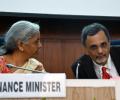
'... and without necessarily calling them Economic Surveys.' 'One should stick to the main focus, which is to give people a good perspective on how the economy is doing.'

'They have started becoming an important player, but not at the same level as they were in the earlier part of the decade.'

'I believe the modified scheme is much more beneficial and simpler.'
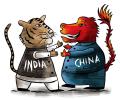
The International Monetary Fund (IMF) has said India and China will account for half of the global economic growth in 2023, as the multilateral agency retained its growth forecast for Asia's third-largest economy for 2023-24 (FY24). "India remains a bright spot. Together with China, it will account for half of global growth this year, versus just a tenth for the US and euro area combined," the IMF said in its latest update to the biannual World Economic Outlook. Growth in India is set to decline from 6.8 per cent in 2022 (FY23) to 6.1 per cent in 2023 (FY24) before picking up to 6.8 per cent in 2024 (FY25), the global lender said while citing "resilient domestic demand despite external headwinds".

'This government has always been fiscally conservative. It never resorted to fiscal profligacy.'

'Limited spillovers' to Asia's third-largest economy, even as world 'perilously close' to recession.
